## Security for Humans What is the role of humans in cybersecurity? --- 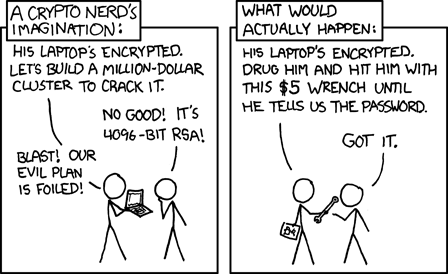<!-- .element height="600" --> Note: Technical vs. Human Errors --- 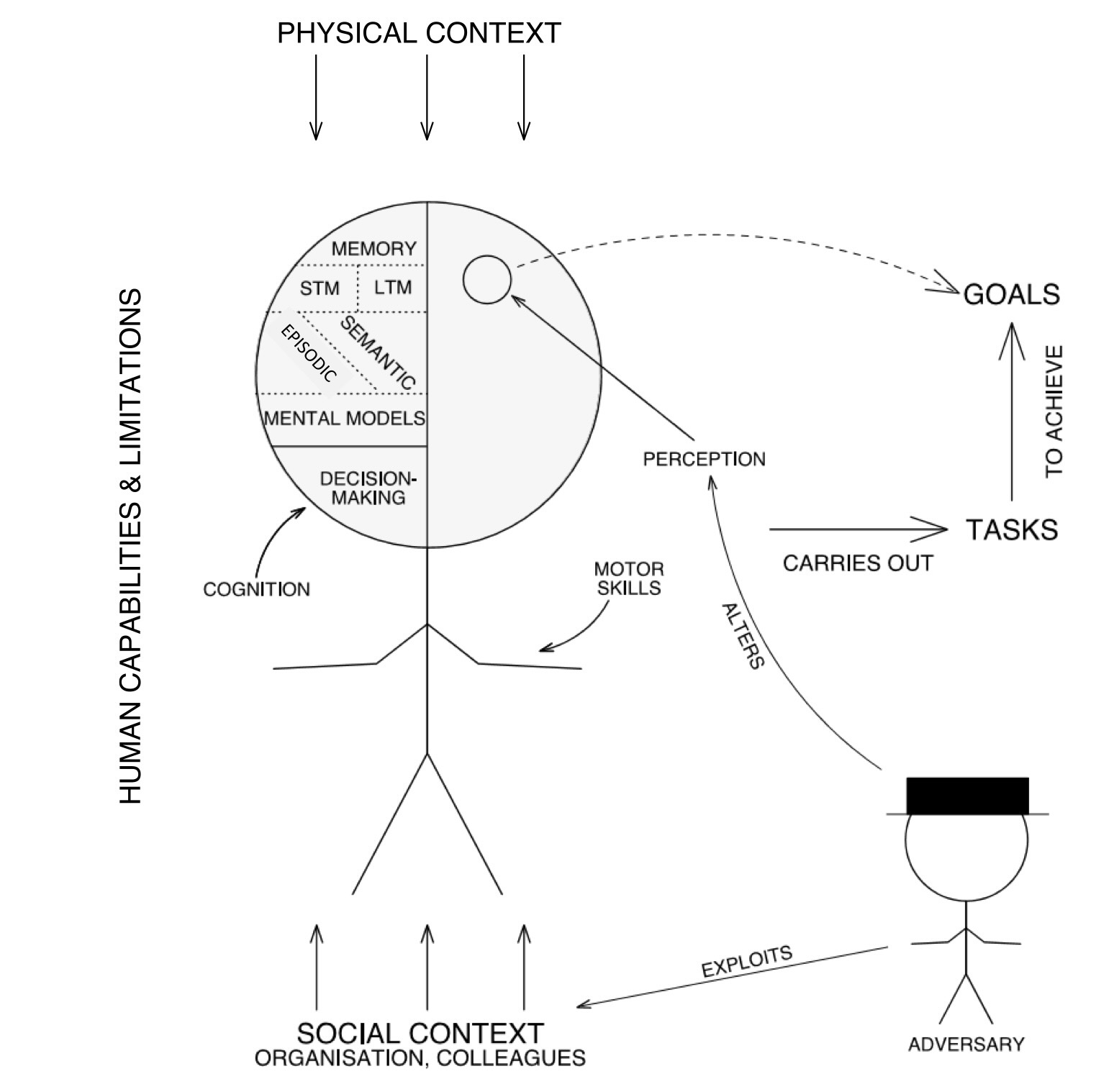<!-- .element .nostretch height="600" --> --- ## Making Security Usable Security must fit with four key elements: 1. Capabilities and limitations of the target users 2. Goals of the users 3. Physical and social context of use 4. Capabilities and limitations of the device used --- ## 1. Capabilities and limitations of users --- * Memory * Attention <!-- .element: class="fragment fade-in" data-fragment-index="1" --> * Time <!-- .element: class="fragment fade-in" data-fragment-index="1" --> * Motor skills <!-- .element: class="fragment fade-in" data-fragment-index="1" --> * Perception <!-- .element: class="fragment fade-in" data-fragment-index="1" --> --- 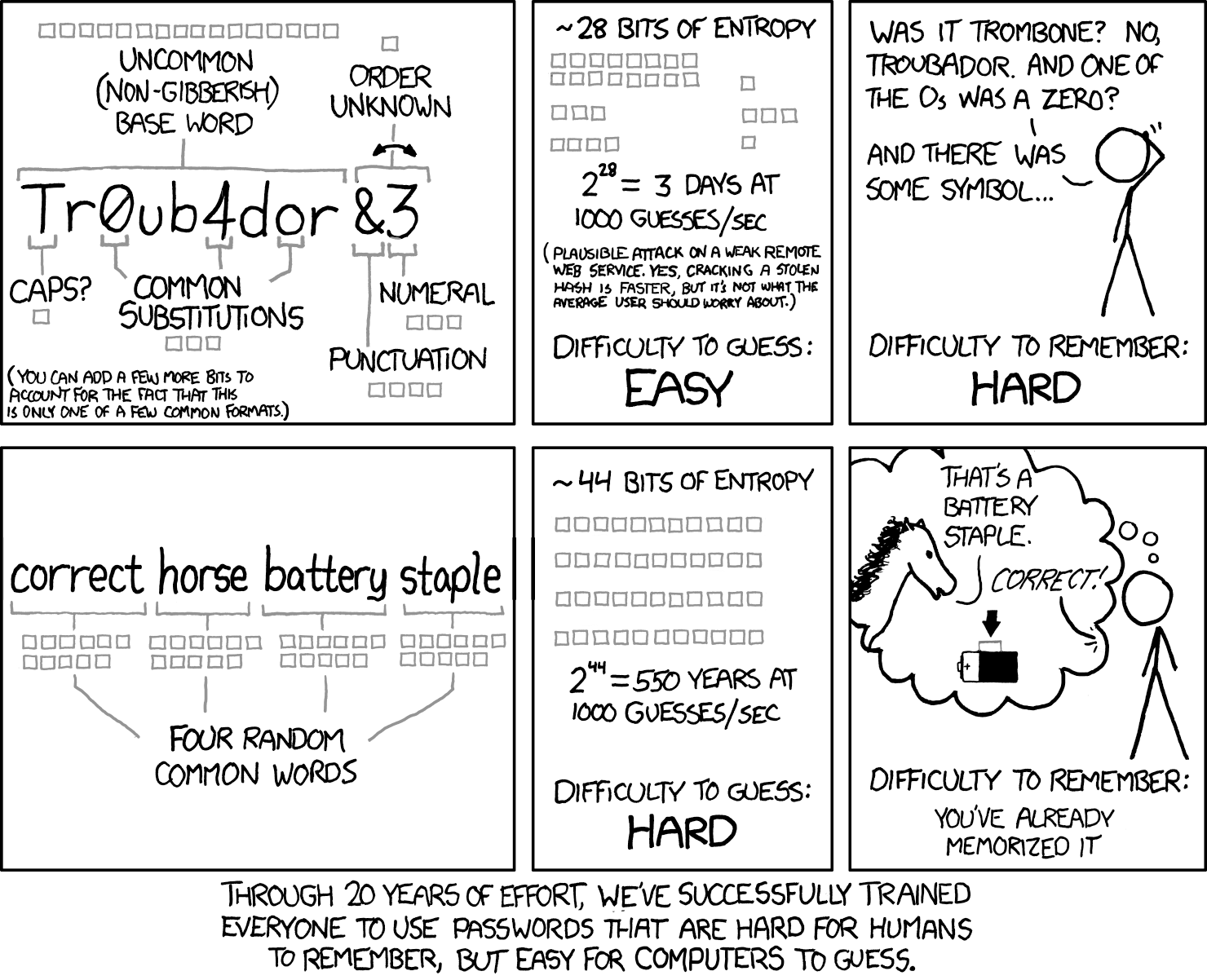<!-- .element .nostretch height="600" --> --- ## 2. Goals of the users --- **Production task**: why you are using the device **Enabling task**: something else you have to do --- ### Challenge: Security is a enabling task <!-- .element: class="r-fit-text" --> --- ### Compliance Budget: People keep track of how much time/effort they spend on enabling tasks Security fatigue if it seems like too much <!-- .element: class="fragment fade-in" --> --- ## 3. Physical and social context of use --- #### Physical Context * Light affects how cameras, biometrics work * Noise interferes with voice recognition * Temperature affects both humans and tech * Interactions on the move vs. at the desk --- #### Social Context * Norms for interaction (e.g. Midwest nice) * Personal values * Trust, and distrust --- ## 4. Capabilities and limitations of the device used --- #### Examples * Entering Duo PIN on watch (ugh!) vs. phone vs. computer * Screen size * Bring your own device -- old, limited? --- # Folk Models of Computer Security --- ### What are people thinking when they make security decisions? --- Mental Model: A functional model in a person's mind about how some aspect of the world works --- #### Viruses 1. Viruses are bad software 2. Viruses are buggy software 3. Viruses cause mischief 4. Viruses support crime / theft --- #### Hackers 1. Hackers create digital graffiti 2. Hackers are burglars 3. Hackers target big fish 4. Hackers are contractors for criminals --- ### Do users try to do security? Can they? --- ## Users are not the enemy